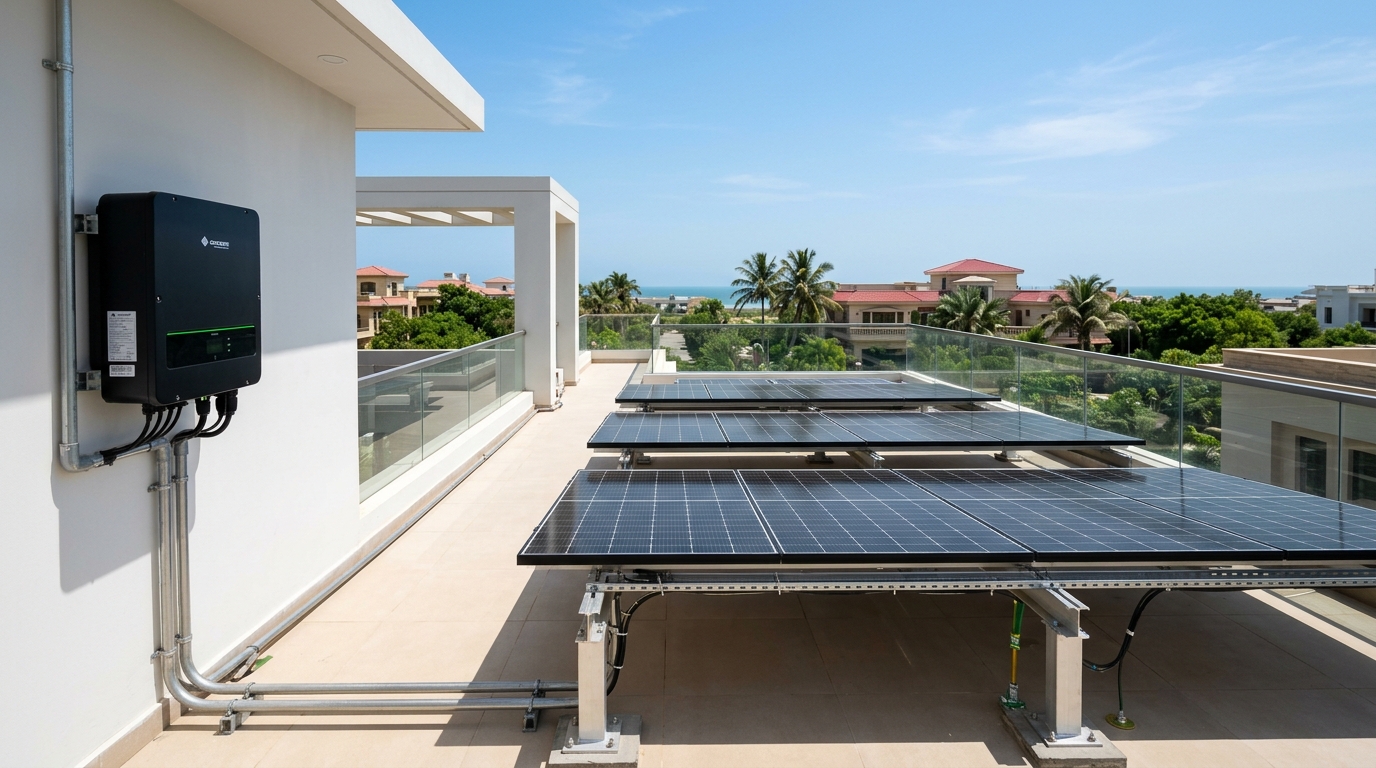
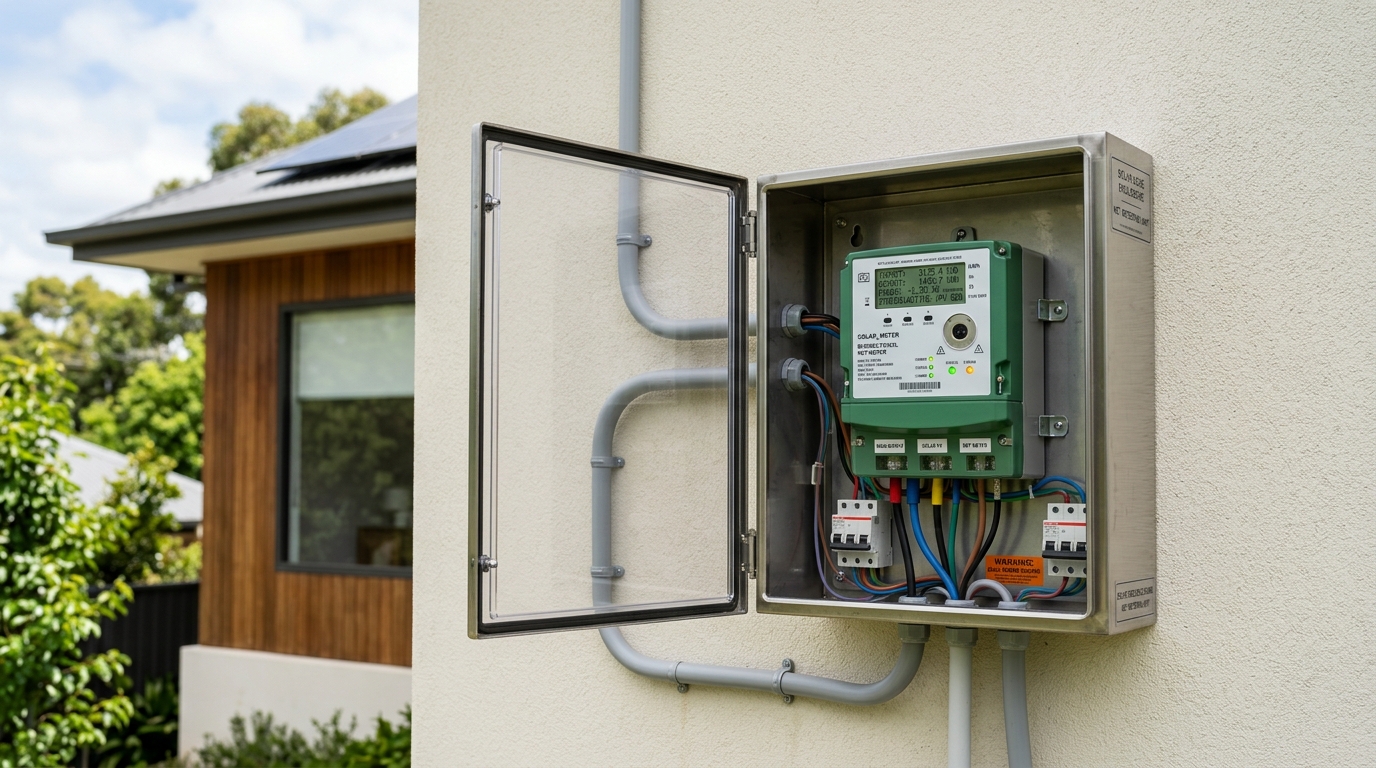
Net billing and older net-metering agreements are not the same
Solar customers in Karachi should check the utility's current process before sizing a system around exported electricity. K-Electric now publishes its distributed-generation service as net billing under the NEPRA Prosumer Regulations 2026. Earlier agreements and existing systems may have different treatment, depending on the agreement and whether a material modification is made. This guide was checked against official materials available on 21 October 2026; rules and application requirements can change.

How to think about the current arrangement
For a grid-connected solar system, energy generated and used in the building can reduce the amount imported from the utility at that time. Electricity exported to the grid is handled under the applicable billing arrangement; it should not be assumed to offset imported units one-for-one. K-Electric's current guidance describes separate billing treatment for energy imported from the utility and energy supplied back to it. The actual bill depends on applicable tariffs, billing period, meter readings, taxes and charges, and the customer's agreement.
New applications and existing agreements
K-Electric's current page directs new applications to net billing under the 2026 Prosumer Regulations. Its FAQs distinguish customers with valid earlier agreements, who may continue under their agreement until expiry if the facility is not materially modified. Because the facts matter, confirm with K-Electric before changing capacity, replacing equipment, or relying on a previous export rate. Do not use an older installer's calculator as proof of the credit you will receive.
Approval and application requirements
NEPRA's August 2026 amendment states that distributed-generation facilities of 25 kW or below do not require Authority concurrence, but the relevant licensee's approval still applies. Larger facilities may have other application and fee requirements. System size, consumer connection, distribution capacity, technical requirements, and current forms affect the process. The utility may require compliant equipment and documents before interconnection. A contractor can help prepare project information where agreed, but cannot promise utility approval or timing.
What this means for system design
Design for the customer's own load first, then evaluate expected export under the current arrangement. Review hourly or interval demand where available, daytime operating schedules, seasonal loads, and the import pattern outside solar hours. Batteries may shift some solar energy for later use, but add capital cost and conversion losses. Compare the battery's usable energy and power with the loads and duration it is intended to support.
Documents and questions to prepare
- Recent electricity bills and consumer reference information.
- Connection phase, sanctioned load, and meter details.
- Proposed inverter and panel model numbers and capacity.
- Single-line diagram and protection information, if requested by the utility.
- Written confirmation of fees, application steps, and the expected metering arrangement.
Use primary sources for current rules
Check K-Electric's net-billing page, the NEPRA legal index, and the NEPRA amendment dated 6 August 2026. Confirm which version applies to your case before signing a solar proposal.
Compare solar proposals using the same assumptions
Ask each installer to show the expected self-consumption and export separately, specify the tariff and export assumptions, and state whether utility application support is included. Review the solar system type guide and price factors before comparing payback projections.
Explore Verified Karachi Engineering Services & Technical Guides
Connect with FWB Ventures' certified engineering divisions for turnkey site inspections, hardware specifications, and project quotations across Karachi.
Certified EPC on-grid, hybrid, and commercial solar systems with K-Electric net-metering approval.